
Vanilla JavaScript in 2026: Why You Still Can’t Ignore It
Vanilla JavaScript in 2026: Why You Still Can’t Ignore It

Martin Ferret
February 3, 2026
Frameworks promise simplicity
Every framework claims to “fix” JavaScript.
Less boilerplate.
Cleaner code.
Faster development.
And at first, it works.
Until something breaks, and suddenly you don’t know what the code is actually doing.
Frameworks don’t replace JavaScript
They abstract it.
Closures, references, scope, mutation, events: none of these disappear when you use React, Vue, or Angular. They’re just hidden.
Developers who understand JavaScript adapt quickly.
Developers who don’t become dependent on tools.
Native APIs are better than ever
Modern browsers offer powerful APIs out of the box:
fetchcovers most HTTP needsIntersectionObserverreplaces scroll hacksResizeObserverenables responsive logic- DOM APIs are consistent and fast
Many libraries exist today only because people stopped checking what the platform already provides.
Knowing vanilla JS makes you better with frameworks
You write fewer effects.
You manage state more intentionally.
You debug faster.
Vanilla JavaScript isn’t about avoiding frameworks.
It’s about using them with clarity.
Final thought
Frameworks come and go.
JavaScript remains.
If you want longevity as a developer, invest in the language: not just the tooling.
Ready to prove your JavaScript skills?
Get certified in JavaScriptMore JavaScript articles
Keep learning JavaScript. Then get certified when you are ready.
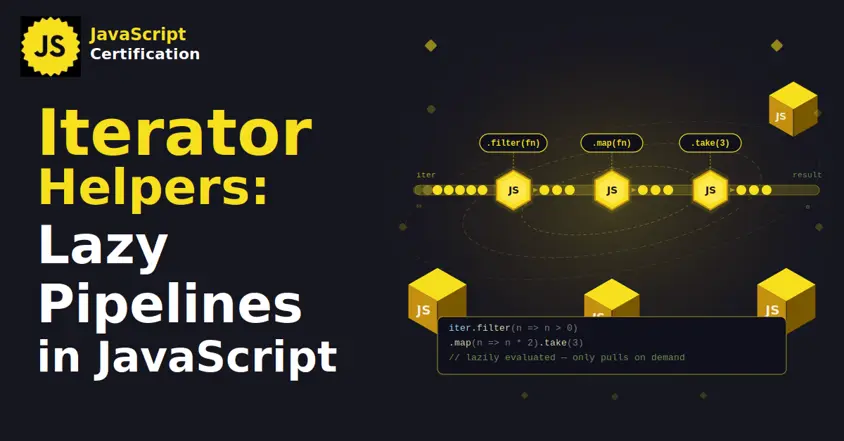
Iterator Helpers: Lazy Pipelines in JavaScript
ES2025 added map, filter, take and drop to iterators. Learn how lazy pipelines skip intermediate arrays, handle infinite sequences, and where they do not help.
Martin Ferret
Oct 6, 2026
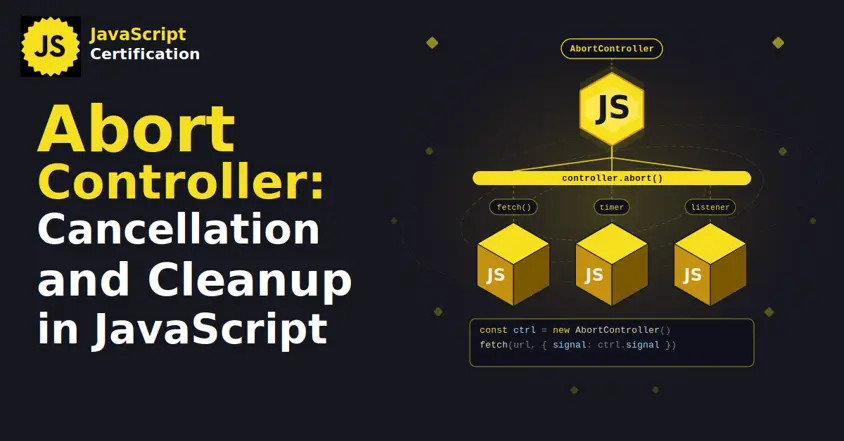
AbortController: Cancellation and Cleanup in JavaScript
AbortController does more than cancel a fetch. Learn how one signal cleans up event listeners, times out requests, and combines with AbortSignal.any().
Martin Ferret
Sep 22, 2026
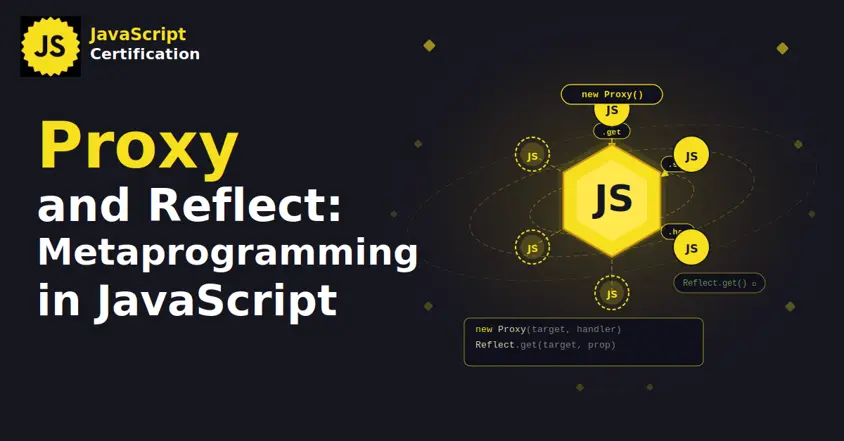
Proxy and Reflect: Metaprogramming in JavaScript
Learn how JavaScript Proxy and Reflect intercept object operations: the 13 traps and why Reflect matters.
Martin Ferret
Sep 8, 2026