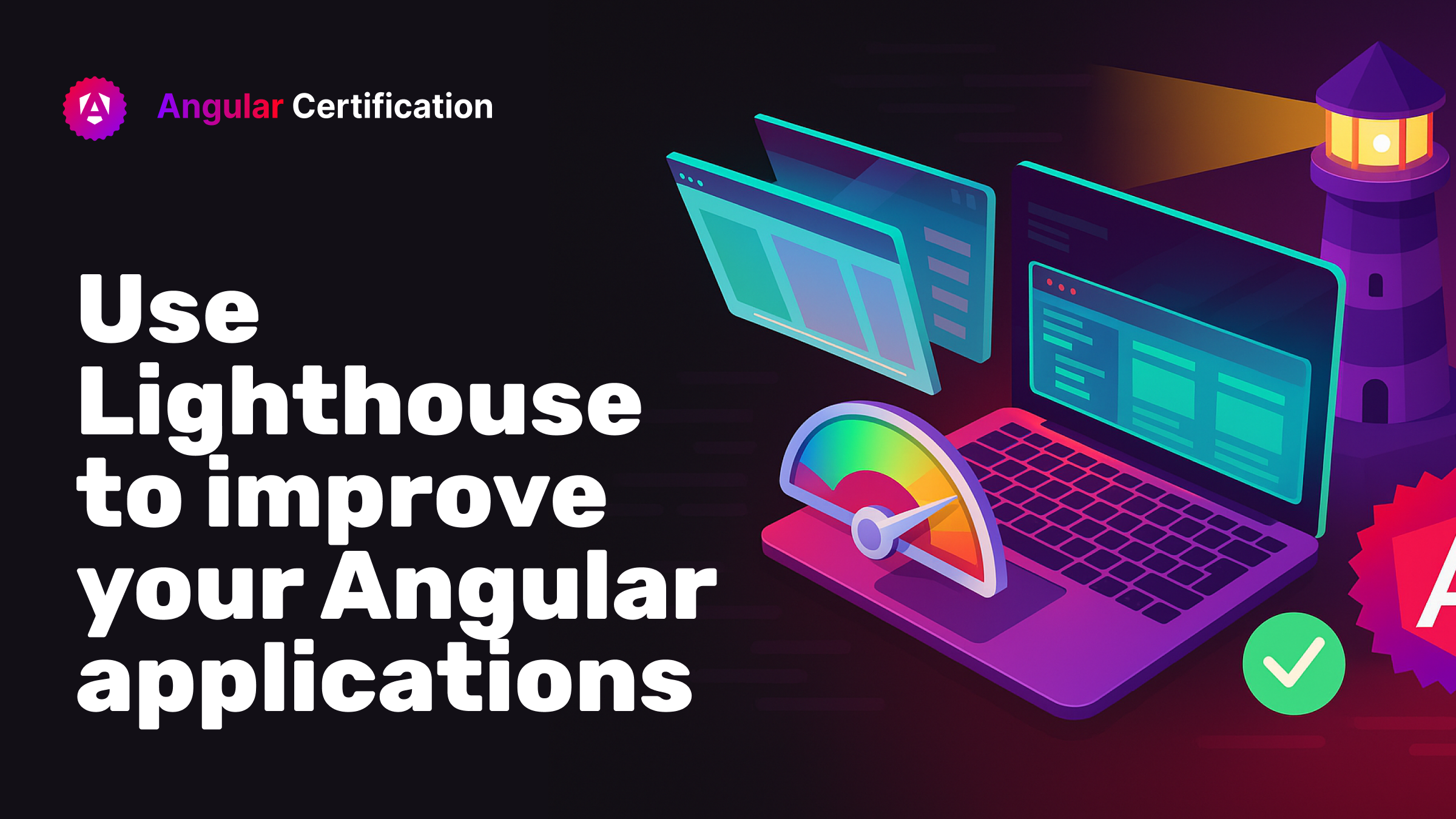
Use Lighthouse to improve your Angular applications
Angular developers often focus on code structure and framework mastery—but end users care most about speed, accessibility, and visibility. This article highlights how tools like Google Chrome’s built-in Lighthouse can help you measure and improve your app’s performance, accessibility, and SEO. By running quick audits and reviewing actionable insights, developers can bridge the gap between technical excellence and real-world user experience.

Alain Chautard
October 24, 2025
As Angular developers, we tend to focus on component architecture, modules, TypeScript, and the best framework use. Most of the time, those things differ from what matters to end users.
End users usually want:
- Performance – 60% of the web’s traffic happens on smartphones that don’t always have fast internet connections.
- Accessibility – Is your website accessible to everyone? Did you check if color-blind people could see it correctly? Do you use alternate labels for images and buttons for screen readers that read the content to a blind user?
And, of course, if your website is supposed to be discoverable on the web, there’s search engine optimization (SEO).
The best way to know how you’re doing in all these categories (and more) is to use a Google Chrome browser built-in feature called Lighthouse. It’s a tab available in the dev tools:

Navigate to your web app (a public URL is needed), open Lighthouse in the dev tools, and click the “Analyze page load” button. Note that you can also simulate a mobile device to get a different report. You’ll get a report with scores in all these categories:

Clicking on any of the scores gives you a TODO list of possible improvements. You can expand every item to get more information about what to fix, how to do it, and why it’s important:

The nice thing about Lighthouse is that once you have improved your app, it takes just a few seconds to test your website again and see your scores increase.
More certificates.dev articles
Get the latest news and updates on developer certifications. Content is updated regularly, so please make sure to bookmark this page or sign up to get the latest content directly in your inbox.
Building Reusable Validators in Angular Signal Forms
Learn how to create reusable custom validators with Angular Signal Forms, with practical examples for building flexible and maintainable form validation.
Alain Chautard
Sep 29, 2026
A Reference to Composable Patterns in Vue
A catalog of practical patterns for writing composables that are flexible, predictable, and easy to reuse.

Reza Baar
Sep 23, 2026
AbortController: Cancellation and Cleanup in JavaScript
AbortController does more than cancel a fetch. Learn how one signal cleans up event listeners, times out requests, and combines with AbortSignal.any().

Martin Ferret
Sep 22, 2026