Anti-pattern series: Not unsubscribing from Observables
This article explains how Angular 16 improves observable cleanup using takeUntilDestroyed and recommends applying it in services rather than components, so all subscribers are automatically protected from memory leaks.

Alain Chautard
January 15, 2026
We covered this in our newsletter before: Observables can cause memory leaks if we don’t unsubscribe from them.

Before Angular 16, there were a few different techniques available to unsubscribe automatically, the best of those being the async pipe (and yes, it’s possible to use the async pipe 100% of the time if you use the tricks highlighted here – no excuses).
With Angular 16, things are even better, as you can use the new takeUntilDestroyed operator as follows:
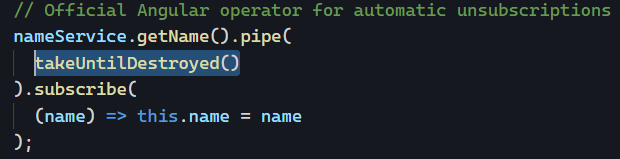
But here’s my million-dollar tip for today: Instead of using takeUntilDestroyed in your components, use it in the services that expose such Observables:

That way, whether you use an async pipe or not, your components are covered. That’s one of the nice things about Observables: We can change them whenever and wherever we want using pipe(), including in our services – so that all subscribers benefit from that change downstream.
More certificates.dev articles
Get the latest news and updates on developer certifications. Content is updated regularly, so please make sure to bookmark this page or sign up to get the latest content directly in your inbox.
Building Reusable Validators in Angular Signal Forms
Learn how to create reusable custom validators with Angular Signal Forms, with practical examples for building flexible and maintainable form validation.
Alain Chautard
Sep 29, 2026
A Reference to Composable Patterns in Vue
A catalog of practical patterns for writing composables that are flexible, predictable, and easy to reuse.

Reza Baar
Sep 23, 2026
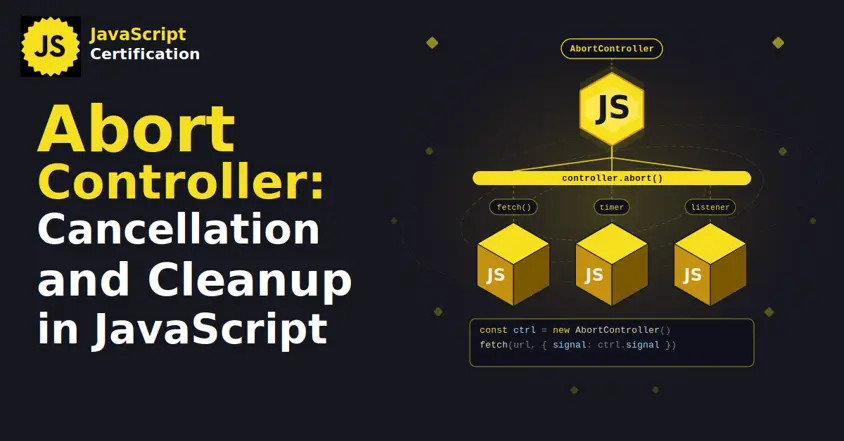
AbortController: Cancellation and Cleanup in JavaScript
AbortController does more than cancel a fetch. Learn how one signal cleans up event listeners, times out requests, and combines with AbortSignal.any().

Martin Ferret
Sep 22, 2026