
AI Coding in React: What You Still Need to Know
AI tools like Cursor and Copilot make React development faster, but your React knowledge determines how good the output is. Here's what you need to know.

Aurora Scharff
March 24, 2026
AI coding tools have changed how React developers work. Tools like Cursor, GitHub Copilot, and v0 can generate components, write tests, refactor code, and scaffold entire features from a text prompt. If you haven't tried them yet, the productivity gains are real.
But there's a catch. The better you understand React, the more useful these tools become. And when you don't understand what the AI is generating, things go wrong in ways that are hard to debug. This post is an introduction to AI-assisted React development, what it's good at, where it falls short, and why your React knowledge matters more than ever.
What AI Coding Tools Actually Do
AI coding tools come in a few different forms:
- Inline completions suggest code as you type. GitHub Copilot and Cursor both do this. You start writing a function, and the AI predicts what comes next based on the context of your file and project.
- Chat and agent modes let you describe what you want in plain language and get code back. Both Cursor and GitHub Copilot have chat panels for asking questions and agent modes that can edit multiple files, run commands, and fix errors across your project from a single prompt. Claude Code is a similar agent that works from the terminal. These AI agents can handle multi-step tasks autonomously, which is powerful but also means you need to review what they produce carefully.
- Vibe coding tools like Vercel's v0 let you describe what you want to build in plain language and get a working app or UI back. You can iterate on it conversationally, refining the design and behavior as you go.
The common thread is that these tools are fast at producing code. They can generate a form component with validation, a data table with sorting, or a set of API hooks in seconds. For boilerplate, scaffolding, and repetitive patterns, that speed is genuinely transformative.
Where AI Shines in React Development
There are tasks where AI tools consistently save time:
Boilerplate and scaffolding. Setting up a new component with TypeScript types, props interfaces, and basic structure is tedious. AI handles this well because the patterns are predictable.
Writing tests. Describing what a component should do and getting a test file back is one of the highest-value uses. The AI can generate test cases you might not think of, and you can review them for correctness.
Refactoring. Renaming a pattern across files, extracting a custom hook, converting class components to functions. These are mechanical tasks where AI reduces the time from minutes to seconds.
Exploring unfamiliar APIs. If you're trying a new library or React feature for the first time, asking an AI tool to show you an example is often faster than reading through documentation. It gets you a starting point you can then verify and adjust. You can also ask follow-up questions to understand why it made certain choices. The AI will explain as much as you ask it to, so it's really up to you to keep asking until you understand what the code is doing.
CSS and styling. Translating a design into Tailwind classes or CSS modules is something AI tools do surprisingly well, especially when you can describe the layout in natural language.
Where It Falls Short
AI tools generate code that looks right. It compiles, it renders, and it often works for the happy path. The problems show up in the details.
React-specific patterns. AI frequently gets the nuances of hooks wrong. It might pick the wrong hook for the job, miss a dependency in an effect, or add unnecessary memoization. It also tends to reach for older, more verbose patterns when simpler options exist. For example, AI will often add useMemo and useCallback everywhere when the React Compiler already handles memoization for you, or it might generate code that violates ESLint rules the compiler relies on. Or it might build a complex component with inline logic when a well-known pattern like compound components would make the code cleaner and more reusable. Unless you know these patterns exist and ask for them, the AI won't suggest them on its own.
Component architecture. AI tends to put everything in one component. It rarely suggests extracting logic into custom hooks, breaking things into smaller composable pieces, or structuring code for reusability. It can produce a working feature that's hard to maintain because the architecture isn't thought through.
State management. Deciding where state should live, whether something should be a URL parameter, context, or local state, requires understanding your application's data flow. AI doesn't have that context and will default to the simplest option, which isn't always the right one.
Performance. AI can generate code that causes unnecessary re-renders, creates new references on every render, or fetches data in ways that create waterfalls. Understanding why something re-renders and how React schedules work is still on you.
Accessibility. AI-generated components often miss ARIA attributes, keyboard navigation, focus management, and screen reader support. These aren't things you can easily verify by looking at the output in a browser.
How React Knowledge Makes AI Tools Better
The developers who get the most out of AI coding tools are the ones who can evaluate what the AI produces. That means having a solid mental model of how React works: how hooks behave, how rendering and re-rendering are triggered, how data flows through components, and when side effects run and clean up.
When you understand these things, you can prompt AI tools more precisely and catch mistakes in what they generate. You move from accepting whatever the AI suggests to directing it toward the right patterns. A vague prompt like "build me a form" gets generic output. A specific prompt that describes the behavior you want, the state management approach, and the error handling strategy gets something much closer to production-ready.
Getting Started
If you're new to AI coding tools, here's a practical starting point:
- Pick one tool and learn it well. Cursor and GitHub Copilot are the two most popular choices for React developers right now, and they share a lot of the same features: tab completions, inline editing, agent mode, and chat. GitHub Copilot is free for students, which makes it a great starting point if you're still learning. Try using Plan mode before jumping into code, especially for larger features. It lets you think through the approach with the AI before it starts writing, which leads to better architecture and fewer rewrites.
- Start with low-risk tasks. Use AI for writing tests, generating TypeScript types, or scaffolding new components. Review everything it produces before committing.
- Add project context. Most tools support ways to give the AI context about your project. The AGENTS.md format is an open standard for providing instructions to coding agents, covering things like project structure, conventions, and architecture decisions. You can also install skills like Vercel's React best practices, which give the AI a set of performance and pattern rules to follow. This dramatically improves output quality because the AI stops guessing and follows established patterns instead.
- Feed it good resources. AI training data can be outdated, and React's newer features are often misused in generated code. Before asking the AI to build something, point it to the relevant documentation first. You can paste a docs URL, attach a file, or ask it to fetch the latest docs for you. Giving the AI accurate, up-to-date reference material before it starts writing makes a big difference in output quality.
- Build your foundation. AI tools amplify what you already know. If you're confident in React fundamentals, hooks, concurrent features, and component patterns, you'll get significantly more value from AI assistance.
AI Doesn't Replace Understanding
AI coding tools are powerful, but they're amplifiers, not replacements. They make experienced developers faster, and they give beginners a way to explore. But they don't teach you why something works, or when one approach is better than another.
If you're just spinning up a quick demo or prototype, letting the AI drive is fine. Anyone can do that at this point. But if you're building something you need to maintain, it's worth being intentional about what you accept. The risk is delegating your thinking, letting the AI make architectural decisions and pick patterns without understanding why. That can leave you with a codebase you can't debug or extend. You don't have to review every single line, but try to stay in the driver's seat for the decisions that matter.
This is also why certifications still matter in an AI-driven world. When anyone can generate code with a prompt, proving that you actually understand the underlying concepts becomes more valuable, not less. A certification validates that you can reason about React, not just produce it.
Sources:
More certificates.dev articles
Get the latest news and updates on developer certifications. Content is updated regularly, so please make sure to bookmark this page or sign up to get the latest content directly in your inbox.
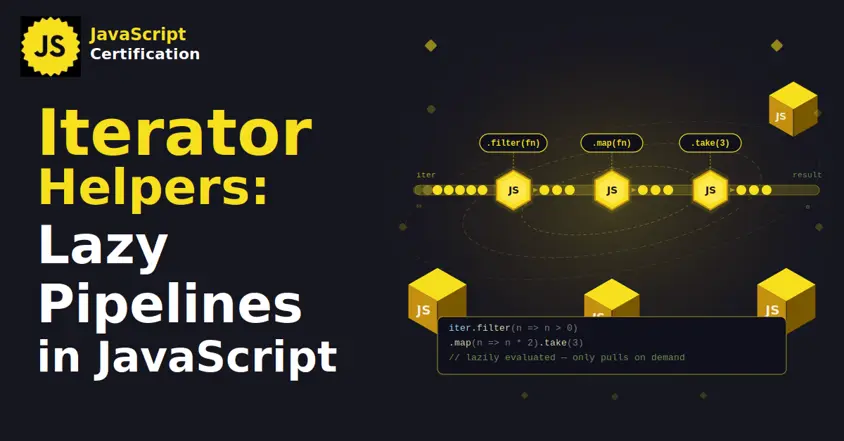
Iterator Helpers: Lazy Pipelines in JavaScript
ES2025 added map, filter, take and drop to iterators. Learn how lazy pipelines skip intermediate arrays, handle infinite sequences, and where they do not help.

Martin Ferret
Oct 6, 2026
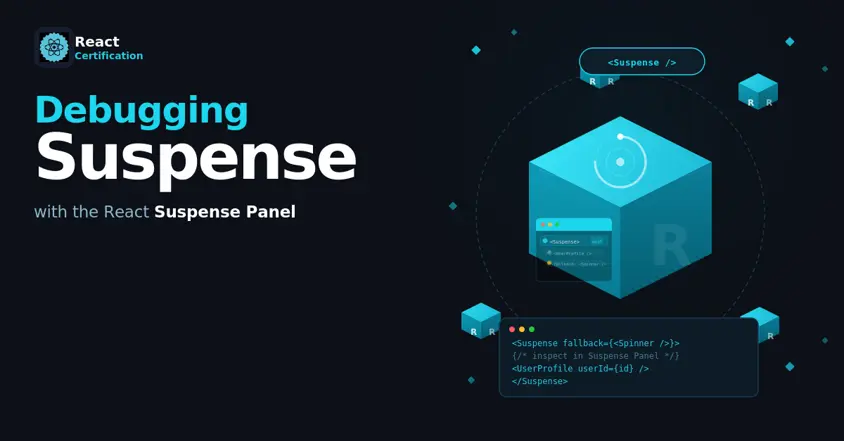
Debugging Suspense with the React Suspense Panel
The Suspense panel in React Developer Tools shows which boundary suspended, what it was waiting for, and the order your page revealed its content.
Aurora Scharff
Oct 1, 2026
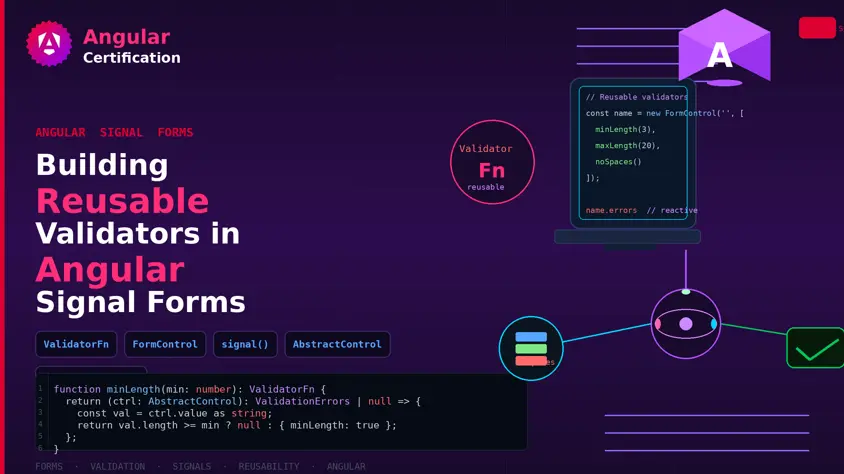
Building Reusable Validators in Angular Signal Forms
Learn how to create reusable custom validators with Angular Signal Forms, with practical examples for building flexible and maintainable form validation.
Alain Chautard
Sep 29, 2026